
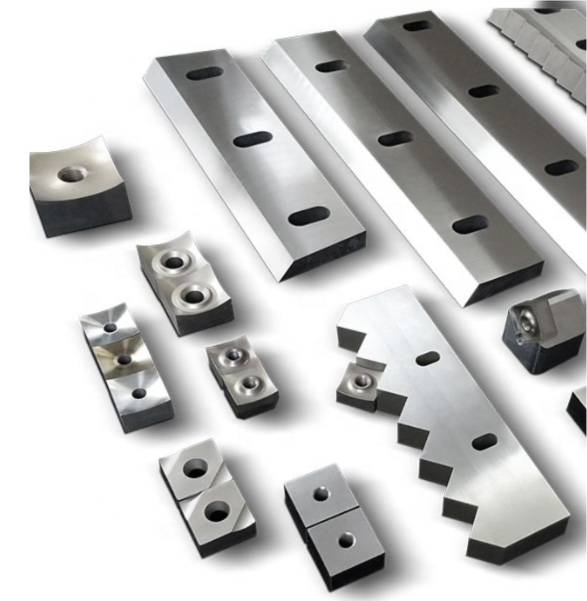
Maintenance and care of industrial shredding and granulating blades
Industrial shredders and granulators are essential components in recycling and waste management processes, where efficiency and reliability of the equipment are key. To ensure optimal operating parameters, it is necessary to implement systematic maintenance of cutting tools. Appropriate maintenance plan extends the life of machine components, minimises downtime and reduces total operating costs (OPEX).
Inspection and diagnostics of knife condition
For long-term functionality, it is crucial to perform periodic visual and technical inspections:
- Frequency: at least once a week or every 24 hours of operation.
- Criteria: sharpness of the blade, signs of abrasive wear, micro cracks detectable with a magnifying glass, geometric accuracy of edges verifiable with a calliper.
- It is advisable to keep a digital record of the inspection results for retrospective analysis.
Cleaning and decontamination of blades
The blade must be regularly cleaned of adhering dirt and material residues. The optimal use is non-abrasive solvents and compressed air, or manual disassembly and subsequent cleaning. We recommend avoiding acidic products and high-pressure washing, which can cause corrosion damage or disruption of the alignment of the blades.
Sharpening and service renovation
Cutting performance depends significantly on the quality of the blade. Signals for the need for sharpening include a decrease in crushing efficiency, a higher content of dust present in the final product, cut deformation and visual dullness. Hand grinders and files can be used for basic maintenance; in case of extensive wear, it is advisable to entrust sharpening to a specialised machine service. In case of destructive damage, replacement or comprehensive renovation of the cutting segment is necessary.
Lubrication and mechanical adjustment
Proper lubrication reduces friction and eliminates excessive wear. Use recommended lubricants for high-speed applications according to the manufacturer's specifications. The lubricant is applied in a thin layer to functional surfaces, moving bearings and other friction parts. Regularly check and adjust the knife tension to ensure optimal cutting geometry and eliminate vibrations.
Preventive maintenance and process management
Systematic planning of service interventions includes compiling a checklist (monthly/quarterly), training employees in safe handling and keeping detailed maintenance documentation. These steps extend the service life of your equipment and allow for more accurate prediction of replacements.
Handling and storage
When handling, it is necessary to use protective gloves and certified tools, which minimise the risk of injury or deformation of components. It is advisable to store blades in a dry and clean environment, ideal are protective cases or mounted stands, which eliminate the risk of corrosion and mechanical damage.
Troubleshooting
Even when taking consistent care, the following problems may occur:
- Clogging: First, physically remove the clog, then check the sharpness and evaluate the reason (e.g. worn blades).
- Uneven crushing: Check the alignment and sharpness of the blades, adjust the mechanism settings if necessary.
- Diagnostics: After making repairs or adjustments, perform a test run to determine whether the problem has been effectively eliminated.
Conclusion and contact
Adhering to technical and safety standards when cleaning, sharpening and inspecting blades leads to reduced operating costs and maximised efficiency of the industrial shredding machine
If you have any questions or are interested in purchasing top quality blades, please contact us by email or phone.