
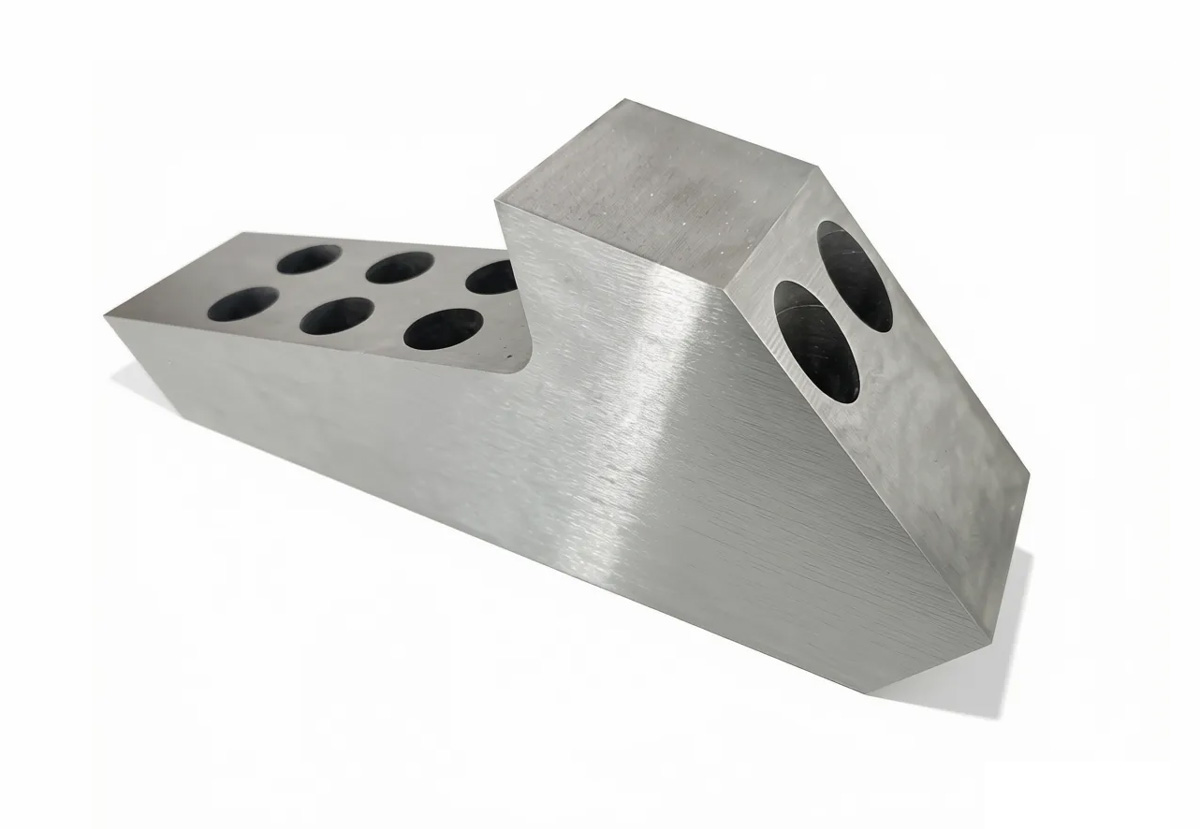
Best Material to Manufacture Two-Shaft Shredding Blades
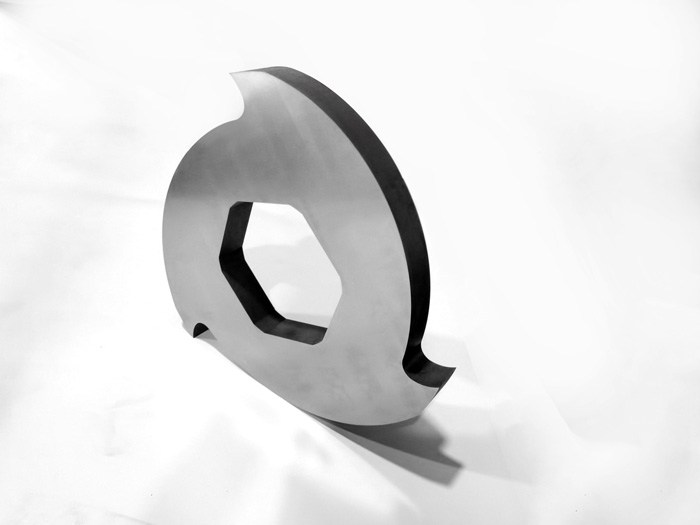
Blades are arguably one of the most important parts of shredders, and one of the key aspects that defines a blade is the material it is made out of. In this article, we will discuss steel alloy DIN/EN code: 1.2990 that we recommend as most suitable material to manufacture shredding blades from.
Definition of alloys
Alloys are simply mixtures of materials that include at least one metal, often producing materials that are both strong and hard. Essentially, the materials that the alloy will be made out of are melted and then mixed together, meaning the atoms do not chemically bond together with each other and therefore cause the pattern inside the material to be irregular, leading to higher melting points and strength.
Steel is a specific alloy of Iron and Carbon, with Iron taking up the majority of particles in the material while Carbon and the other elements occupy much smaller amounts.
Key Terms
- Strength: maximum load before permanent deformation
- Toughness: how much energy can be absorbed before cracking or chipping
- Hardness: how difficult it is to scratch or dent
- Brittleness: aptness to break with little or no plastic deformation
Alloy 1.2990 (cold-work tool steel)
The alloy 1.2990, is a next-generation improvement over 1.2379. Essentially, the chemistry of 1.2379 is altered to prevent the main limitation that it had - a relatively low toughness. The way this happens is that the material loses a very small amount of wear resistance in order to drastically improve its toughness. It also has improved machinability. This translates to a material perfect for handling more demanding applications such as mixed plastics, rubber, tyres including steel parts as high impact is less of a problem, wood, textiles, light metals and e-waste.
Chemical composition by weight:
| C | Si | Mn | P | S | Cr | Mo | V | Ni | Cu |
|---|---|---|---|---|---|---|---|---|---|
| 0.95 – 1.05% | 0.80 – 1.10% | 0.25 – 0.50% | ≤ 0.030% | ≤ 0.020% | 7.80 – 8.30% | 2.00 – 2.20% | 0.25 – 0.50% | ≤ 0.25% | ≤ 0.25% |
As this material is a steel alloy, it has some similarities in its structure with some of the other materials. However, it has a few key differences that significantly improve its performance. The main differences are that it has a slightly lower concentration of both Carbon and Chromium, with higher levels of Molybdenum.
Chromium tends to produce large carbides that act as blocky particles in the way of the consistent structure of the alloy, which does improve the wear resistance of the material but also makes it brittle.
Molybdenum forms rounder carbides and prevents Chromium from clumping, forming more refined particles as well as secondary hardening.
Vanadium further refines grain size and ensures the finest, hardest carbides possible. As a result, a cleaner matrix with finer carbides is formed, which increases toughness and energy absorption.
All of this leads to an alloy with similar wear resistance to 1.2379 but with a much higher toughness. This is why it is widely replacing its predecessor due to its better and more versatile structure.
Conclusion
1.2990 cold-work tool steel performs best in where toughness and impact resistance are critical. The steel’s balanced properties make it well-suited option for processing materials that include light metals.
Contact
If you have any questions or are interested in purchasing superb quality blades, please do not hesitate to contact us by email or phone.